The Age of the Entrepreneurial CMO

I was lucky to attend The Economist’s The Big Rethink 2015 (#BigRethink) in March—an amazing series of panel discussions and thought leadership topics delivered through The Economist and featuring senior marketing leaders and innovators. The NYC event theme was: The Age of the Entrepreneurial CMO.

Here are six of the conversations on the Entrepreneurial CMO that I most enjoyed having on that day:

The Data Hairball

We have way too much data, using only some 10% to 15% of what we collect.
So, why can’t we more readily identify the magical data points? The creep factor certainly comes into play. Imagine if the data kings really applied everything that they know about you to a series of personalized messages…creepy. Did you ever hear the term “cyber-azi?”

This still leaves us debating where the data functions should reside in the enterprise. As marketers, we see the data functions directly linked to our day to day abilities and deliverables. One panelist suggests that “When analytics sits in Operations  function, it takes on an inside-out view vs. a customer first view.” This resonates with me and, of course, this theory found consensus with the marketing leaders in the audience.

Corporate silos are preventing some of the massive changes required in the industry

Almost every panelist brought this subject up. Silos-for-the-Entrepreneurial-CMO-to-Fight.

Organizational design needs to transform to reflect today’s real time decision making from an audience demographic profile of one. Organizations such as Google, Amazon and Zappos were referenced as leaders in such an approach. However we were all reminded that even when change happens slowly, we each have a role in keeping it moving forward within our own spheres of influence.

Identity Crisis

If the marketing function was an individual undergoing as much change as the industry is experiencing, it would not be surprising to learn that the person was feeling somewhat overloaded. Definitely. Here are some of the key contributors to this “identity crisis:”
No two CMOs have the same naming convention for employee roles.
The brand is now the customer experience.
And the roles of service, sales, and customer service are indistinguishable in the eyes of the customer, yet the CMO function does not necessarily straddle direct responsibility for the customer service functions.

Somewhat similar to the management of the customer service function is data stewardship. If we are building digital layers around the customer experience, what function in the organizations should have ultimate control over the data?

Be With Me In This Moment

Entrepreneurial-CMO-Focus

With so many real time, online tools, we need to move away from the mindset of a campaign and into the mindset of an ongoing conversation…especially with those who are already customers.
Apps exist for literally everything—being in the present is possible…if you consciously allow it to happen.

Talent trends within the marketing world
With new roles being defined daily, it is difficult to staff up for certain functions. Hence freelancers with specific skills will continue to be an important source of talent. Having an inquisitive nature and being “insanely curious” were traits that resonated across the audience. The ability to think horizontally and to demonstrate an on-going learning perspective personifies the 21st Century professional.

All of these conversations, of course, link back to the evolution of new business structures and the Entrepreneurial CMO.

Content—yes. Usable—not always

The closing conversation for the day featured Ogilvy & Mather’s worldwide chairman speaking about the future of advertising. We were reminded that for some time, communications could be neatly packaged into popular
formats (think: the 30 second spot vs. the 60 second spot, etc.).

Entrepreneurial-CMO-ExpansionThe digital revolution has created seamless boundaries—where information comes from everywhere in real time. A visual of this concept was referred to as “liquid and linked.” Hence we have vast information coming to us with only some 30% of the daily available content actually being read.

Hence, useful content takes on ever more importance. Readers will vote with their fingers and continue to seek sense and relevance in the broad spectrum of channels.

I walked away from the day thinking: Everything has changed. Everything is changing. Yet some things are exactly the same. How do we send the right message to the right person at the right time in the right format? These are very exciting times!

This post was originally posted through MENG, the Marketing Executives Networking Group.
What Can HR Do To Prepare Leaders For A Rapidly Globalizing World?

NYHRPS, the NY Chapter of HR| People & Strategy, hosted a membership group of some 15 executives on March 24 to discuss best practices and viewpoints around global leadership development. Citing recent articles in the Wall Street Journal, facilitator Patrick Wilkinson framed the conversation with references to the significant leadership changes taking place at organizations like Prudential, Credit Suisse  and other Fortune 500 firms. Participants commented on the importance of such pivotal management placements not only at the helm, but on the Board level and within the middle-management ranks. Other participants expressed concern with the development of global leaders when attitudes around diversity and inclusion at the local level remain a challenge for many.

What capabilities will our future leaders need to be successful in tomorrow’s global environment?

While many at the table have held global positions and lived abroad, there was concurrence  regarding  the difference between leading globally through an internalized  understanding of the local area cultures vs. leading a global organization though the lens of one’s own home country. Ex-pat assignments are often short-term and executives live in ex-pat compounds vs. living within the communities of their staff or customers. Not only do they miss the enculturation needed to broaden their perspectives, but they also fail to learn how to make decisions based on the political, economic, and social factors that affect business in these foreign markets.

This being the case, how does one identify and develop those who can truly lead in unfamiliar environments where subtleties in one’s backgrounds are not always obvious –and can bring enormous implications to management style and perspective?

agility

Does living abroad make one a global leader? Can global leadership be learned?

Here our participants had mixed opinions:

  • There are many ways to promote a global mindset, even while in the U.S. (For example: Be part of a cross functional or global virtual team, read world news, read world history to understand the culture, visit ethnic communities.).
  • Short term assignments, affectionately coined “professional management tourism” do not guarantee agile global leadership ability.
  • Some around the table felt that “global mobility” was a mandatory requirement for senior leadership opportunities.

In the development of agile, global leaders, what role can Human Capital Leadership play in ensuring that those who “get it” or have the ability to develop “a global mindset” are identified, coached and placed in situations where they can indeed thrive?

A pre-read article from Accenture Strategy titled “Leadership Imperatives for an Agile Business” outlined the three dominant themes that define effective leaders who are creating and enabling agile business environments. These themes were:

  • Vision and strategy: Defining short-term needs and long-term perspectives in a manner that accommodates being reactive to immediate events while being thoughtful to emerging trends. This is best accomplished by inviting those “outside of the mainstream “to the management meetings.
  • The relationship between leaders and followers: To manage through uncertainty, leadership traits must be developed across all levels of the organization – not just within the senior most management ranks.
  • Driving results: A flexible operating model requires ongoing clarification and reinforcement of expectations, roles and responsibilities.

What is the appropriate definition of “Fit”?

This research study, like the other articles that we read in preparation for the Forum defines logical, measurable actions that are being used to build the nimbleness demonstrated in today’s most agile organizations. However, it is here, that our group paused to acknowledge a viable reason why these programs are finding inconsistent success. Specifically, the reason is Human Behavior.

  • As the pace of change continues to accelerate, the requirements needed in the talent pool change — often being defined in real-time.
  • The infamous theory that you hire talent based on “fit” needs to be critically re-assessed. “Fit is the enemy of innovation”; Fit implies status quo by today’s definition. Transformation comes from radical thinkers who thrive on “smart” change. Innovation and fit should be viewed as one’s ability to change the thinking of others through smart, data-grounded ideas for improvements.
  • Hiring managers need to look at how best to bring talent into the organization that will bring provocative thinking to the table and be rewarded for doing so. In some circles, “failing fast” is the norm and sequential learning takes place exponentially as leaders build upon test and lean scenarios.
  • Herein lays the core of the conundrum: People often hire people who remind them of themselves (consciously or unconsciously). Companies frequently exit-out employees (purposely or subtly) who do not fit the culture.

As a result of this, companies ensure that the drive for fit–the survival of the out of the box thinkers — does not take place. One could say that some companies are weeding out their very best talent; the very opposite of the original intention.

To change this, we need to develop a tolerance and objectivity in seeing the value that non-conformists bring to the corporate future.

  • Organizations like Google, Apple and Amazon seem to know how to do this. While these companies were developed in a ‘new age based on new rules”…….is that really an excuse for the older, established enterprises that are struggling to transform their agility. Really now: Is legacy an excuse for stagnancy? Blockbuster Video. Eastman Kodak. General Motors. See a trend?
  • One participant asked: Do some companies have cultures that are so insular and idiosyncratic that they won’t develop a global mindset? Another person asked if a political change is required first?

Is agility a learned process or a culture? ballerina

Agile leadership is a priority for companies of all sizes and industries. Our Forum included commentary on mid-sized markets, as well as the non-profit sector.

As I wrote this post-event article for NYHRPS, I found this article from Marketing Profs, a leading resource for marketing executives. Four Steps to Creating an Agile Marketing Culture, does not address global issues however it certainly resonates with the conversation around our table.

……” companies often put in place a process, or a set of processes, to address agility instead of taking the time to work on building the culture required to achieve agility and sustain it—What does an agile culture look like?

  • People work across functions and silos to collaborate in self-organizing teams.
  • Decision-making is empowered, and it happens as close to the work as possible.
  • Teams are trusted to experiment, to take initiative, and to even fail as long as they learn.
  • Work is done in short, active cycles of prioritize-test-learn, prioritize-test-learn, and so on.
  • The customer is at the center of decision-making.” Within this context, we refer to the customer of the corporation (Pepsi drinkers, car buyers, and consumer checking account-holders) vs. the (internal) customer to the HR functions (the Business team or the C-suite).

Agile leadership. Global leadership development. None of it matters if it is not directly linked to the business strategy of the organization. And, if the business strategy of the organization includes a global presence, then agility, nimbleness and “the embracement of different becomes expected”.

Are you giving fair consideration to individuals who do not present a traditional fit? Are you creating a tolerant environment for those who represent a diverse profile to the situation? The global organizations that succeed will; and, they are getting ahead of the game by doing these things right now.

Congratulations and appreciation to all who participated in this Forum.

This article was shared on the NYHRPS website on April 10, 2015

Article Written By Sharon Lewis.

The NYHRPS Global Leadership Development Forum Team includes: Sharon Lewis, Laura Mindek, Laura Petersen, Bruce Segall and Patrick Wilkinson.

Get Real! Purpose + Calling + Balance

The New York Human Resources People and Strategy Group recently hosted an insightful presentation featuring social entrepreneur Aaron Hurst.

In this interactive and provocative session, Aaron presented his concept of a “Purpose Economy”, in which purpose will replace information as the dominant economic driver. Embedded in this new definition of purpose are the concepts of:
• Choice
• Calling
• Self-awareness

The desire for purpose, calling or self-fulfillment is not new. However in today’s society which allows 24/7 connectivity, availability and choice…… the boundaries between our work and personal lives is often non-existent. The concept of work: life balance has become a concept of work: life integration. The premise of seeing one’s act of labor as fulfilling and satisfying —regardless of the role one plays in the world of work—- provides the consistency that allows us to thrive in everything that we do.

Research has shown significant levels of employee disengagement and frustration. Further studies surmise that the disengaged workforce is less productive, less dependable, and less loyal to the work-team. Infusing the purpose approach into every aspect of our lives becomes critical. The concept starts with an attitude. Individually, we create purpose by choosing how to approach a job vs. only looking at the actual content of the job that we are doing.

Some industry articles attribute this shift in philosophy to the millennial; I think the fundamentals of the purpose concept have been percolating for a very long time. Our aging society, sandwich generations and millennial attitudes have allowed these frustrations to be channeled in a positive direction. As a member of the Boomer generation, I grappled with work: life balance as I entered my parenting years and was an active participant in remote work schedules, freelance contracts and career off-ramps. The Purpose Economy addresses the personal interests and demands of individuals by “allowing us to publicly balance our multiple obligations”.
balancing act photo
How can we combine passion and expertise consistency in our lives –vs. – looking to our volunteer work and hobbies to fill in these gaps? Does each of us have the ability to work with purpose and to live with purpose? Is this a learned activity? Will this increased awareness obligate everyone (the employers, the employees, the clients and the providers) to realize that work: life integration is reasonable and attainable? The answer is a definite YES!

Aaron shared four recommendations with the audience that can be viewed as opportunities for both the individual as well as the collective employer/work environment to support purpose-oriented activities. They are:

1. Develop individual self-awareness. As an employer, strive to assist your employees in building their self-awareness.
• Those who demonstrate calling in their daily lives see their actions as being bigger than them. They are motivated by the ability to impact others in positive ways. They are confident in their actions being consistent with their driving emotions.

2. Tailor your work to reflect the purpose(s) that motivate you. As an employer, allow the employee to tailor their work to boost their own sense of purpose.
• Doing this involves the deepening of relationships, defining opportunities for growth and maximizing the impact that someone can make in a situation.

3. Connect your personal purpose with your organizational purpose. As an employer, allow your employees to understand the impact of their labor on the bigger picture.
• People who behave from a position of purpose or calling see their efforts as providing positive growth. The power of continuous learning is important to all of us.

4. Celebrate and connect with others who share your approach to life. As an employer, create opportunities where individuals who share a common perspective can learn and grow together (This does not mean that they work together, Rather that they serve as motivators for each other.)
• I note that this example was given within the context of bringing people together who tested with similar purpose profiles. People with different functionalities and backgrounds were able to gain a new perspective on subjects that they had no understanding— when the sharing was made with someone else who shared a similar purpose-perspective. As a marketer, this reiterates the importance of the emotional connections that we create within all aspects of our lives.

May the spirit of purpose guide us successfully into a fulfilling 2015!great miinds quote

The Big Rethink US 2014 Conference

I was lucky enough to attend The Big Rethink US 2014 Conference delivered by conference logoThe Economist and further supported by MENG. The discussions surrounding big data, social networking and customer engagement crossed almost every industry. In this blog post, I will share twelve highlights from the March 2014 conference; they are in no particular order. For additional twitter streams, check out #BigRethink, @TheIdeasEconomy and @sharonlewisnyc.

1.Real Time Marketing
This is the Holy Grail that we marketers seek to achieve with confidence, reliability and available budget parameters. The concept behind achieving this is to set up multi-functional teams that are empowered to be spontaneous within a pre-determined set of boundaries. Huh?? Is this possible?
Yes. The example was the 2013 SuperBowl Dunk in the Dark Oreo campaign. With a zero media spend; one tweet generated 525 million media impressions.

2.Data Context: Opt-in May Still Need a Human Intervention to Avoid Bad Assumptions
At @1800Flowers, they do not assume that you send the same person a Valentines’ Day bouquet every year! In a similar vein, you cannot re-use the data that you collect for an arrangement being sent for a funeral or for condolence purposes. Enough Said!

3. Our attention span has become so short that we do not take the required time to explore many worthwhile options. Here are two examples:
Remember the amount of time that what went into making a 30 second or 60 second commercial? Our requirements for immediate gratification (read: short attention spans), have further crept into the creative process. What happened to the evolution of an idea? Some speaker discussion suggested that similar to the final campaign, the creative process has become one that demands instant gratification. As such, we may be pre-maturely eliminating some great campaigns and bottom line results.

As it relates to getting the consumer to the action stage of the offer: @MaryKayUS spoke about a mobile – first strategy with the goal of accomplishing any action within two clicks. …. “Making it easy for the soccer mom en route to the practice field” to be productive……. @SherryAG That does sound pretty close to instant gratification!

4. We have too many channels of vertical expertise. This impacts our corporate structures and our recruitment efforts
Comments from the CMOS of Lowe’s and The Weather Company spoke to trying to break down the vertical channels of expertise. As an industry, we have already established many proven formulas for successful, relevant marketing. While the quantity of the messaging channels has changed, and the available channels for marketing have changed…… The principles of relevant messaging and singular focus to action have not changed.
A good marketer can learn the nuances of a unique communications channel; Good marketing skills are applicable across any vertical channel. Hence why do we suggest otherwise in our (formal and informal) recruitment and career development policies?

5. “Say what”…….Whose language are you speaking? Whose perspective are you sharing?
There was an “aha moment” when the McCann Truth Central story was shared about a focus group participant stating that they engage in low rates of text messaging. Further probing revealed that this young adult had some 300 text messages daily; another participant piped in to say that they wake up some mornings to 1000 messages on their phone. @McCannTruth @TruthLaura
Lesson reiterated: Perceptions are everything. Probe and define the perception from which one speaks!

6. Crisp, singular messaging is nothing new and should continue to be a mantra for good communications.
Remember the old adage for a good billboard ad: six words or less! Why do we act surprised when the role of crisp singular messaging is re-proven with each new communications channel that we invent?

7. Data Sharing and Privacy
There are conceptual lines that consumers use in determining how/when/what they share. Brands are starting to learn that consumers are more aware than ever that they are sharing and that when they do… “They want something back for it”. Many of the speakers noted that they have received customer complaints from those feeling that their data was not being maximized. Again, this creates a fine line in differentiating a personalized experience from a Yuk factor, also known as a “creepy factor”. The app for a healthier lifestyle called @Noom, spoke to their success in the creation of trusted on-line weight-loss support groups; Caesar’s Entertainment spoke about real time data updates regarding the preferences of their clientele.

8. Data Context, Data Filters and Timely Data vs Relevant Data
A real time, big picture challenge that continues to be tested by marketers are the models behind: How does a brand insert themselves into a conversation that is appropriate and relevant to the customer experience?
• Here is where mobile is changing the retail shopping experience.
• Here is where content is being taken to new levels of storytelling, relevancy and entertainment (interpreted as three distinct and intertwined objectives).
• Here is where the concept of “filter failure” needs to be fine-tuned for efficacy and relevancy.

9. Would this ad prompt someone to want to see the ad again?
It seems logical that re-watching an ad is an important criteria to wanting to share the ad, thereby allowing it to go viral. Music videos being replayed on YouTube are a great example. The “Lowe’s Fix in Six,” vine series offers simple, everyday improvements that could also fit into the category of a “want to replay it”. The Apple ads that speak to what you can do with an apple product were touted as another example.
It is hard to predict what will spark a viral reaction; it is easier to go with creating something that people simply want to see/hear/experience again.

10, Note-taking was visual and intrigued everyone in the audience. Take a look

11. Analysis Paralysis
With data exploding at unparalleled rates, projects quickly become so big that they are scary—even to the best minds in quantitative model development. The presenters advised that we all just get in there and start doing it — not everyone can have the big budgets, however everyone can create learning environments.

12. Funny Expression of the Day
The budgets available to test, measure and deliver were never stated during the conference. SVP and CMO of Frito-Lay North America enthusiastically shared some memorable experiential campaigns with the audience. And, with such stories, she had us all laughing with the expression: “The juice is worth the squeeze”.

In closing: I will paraphrase an organization that was not represented at the conference: “Ya gotta be in it to win it”

Wishing us all much positive learning in our campaign endeavors.

This blog originally posted in March 2014 through the mengonline.com community via http://mengonline.com/blog/2014/03/18/reflections-economists-big-rethink-360-cmo/

Ah-ha Moments for Competitive Intelligence

Competitive Intelligence can have a huge impact to the bottom line of a business. This knowledge comes in many forms, and ultimately, it is the application of human intelligence and human logic that reveals the value in the data, the trends and the inconsistencies.ahha moment lightbulb

With this in mind, the “aha” competitive intelligence moments will often reveal themselves where you least expect to uncover them. Here are some questions to help you find the “aha” in non-traditional places, creating competitive advantages for you and your organization:

1.     Does it really matter what the competition is doing?

Competitive Intelligence is not just about looking at what your industry competitors are doing; it is about seeing your business through a completely new set of eyes.

Better stated: The activity of your peers is only one part of the equation.  In fact, case studies show that many innovative breakthroughs came from non-industry competitors. Yes, know the industry competition and, do position yourself favorably. However, do not spend so much time on the competitor activities that you forget to focus on the activity of THE most important piece of the marketplace: the customer!

2.     Can you make lemonade out of lemons?

We know that every production line output includes first quality and imperfect items. Does your business allow you to develop a secondary distribution channel for the “seconds”? For example: “ding and dent sales” for furniture or appliances or consignment stores for manufacturers over-runs.

The lemonade concept has been successfully applied to situations where fixed costs render heavily discounted, last minute offers a preferable option for the business. Last minute vacation websites (think Travelocity, Cheap Tickets) alongside of theatre ticket offerings (think Play-by-Play and Theatre Mania in NYC)  have trained many consumers to plan these activities at the last minute, thereby allowing themselves  an experience that may otherwise be unaffordable.

3.     Do you have a diversified reading list?

We’ve all been trained to regularly read the daily newspapers and the industry journals for our business specialties. However, Best Practices are often industry-agnostic; can you imagine any call center manager disputing the value in real time call monitoring and feedback loops? Reading industry journals from any other industry but your own; reading political articles that you do not agree with and occasionally scanning a forever classic Dr. Seuss book….can move your mind into new directions and thought patterns that can impact your business?

4.     Does this really have to be a seasonal item?

Back in graduate school, I prepared an advertising campaign for matzo as an all year round cracker choice. Fast forward to today’s metropolitan grocer and you are likely to find boxes of matzo year-round. In a similar fashion, Gold’s Horseradish has created another category of condiments and eliminated horseradish as a seasonal product.

5.     How can you change consumer behaviors?

Slowly is the pessimist’s answer. By speaking to emotions is the more logical answer. Create a competitive advantage for yourself by focusing on the emotional level appeal.

Forget the product benefits – Focus on the storyline. This is another great example of seeing a situation through a different set of eyes. Madison Avenue examples of this:

  • Nike is not about shoes and running shorts. It is about a state of mind: Just Do It. Get out and exercise
  • The L’Oreal tagline” Because You’re worth it” moved the emphasis off of the products and onto the consumer. Yeah, I am worth it – I am beautiful
  • What if we could apply this to our children’s chore-list? Imagine: “A neat room is a higher test score”
  • Zappos is a customer service company…that happens to sell shoes!

SUMMARY:

Competitive intelligence is not just about looking at what your industry competitors are doing; it is about seeing your business through completely different sets of eyes.  And using these new and varied viewpoints to maximize opportunities.


Original posting: FIVE KEY Questions on Competitive Intelligence. New Places to find the “ah-ha” by @sharonlewisnyc #EQlist buff.ly/1gsE3Dz  via @CASUDI

Tame The Elephant in the Room

You know that feeling you get in your gut when a difficult subject needs to be addressed and you suddenly become the world’s master of procrastination.  Is there an elephant in the room?  What do you do if:

  • The customer service center was unable to handle the volume of inbound leads generated by your Facebook campaign.
  • You hit “reply all” on a conversation which included sensitive subject matter intended only for “reply to sender.”
  • An entire electronic file appears to be missing and the intern is still working on updating the documents.
  • Cash is missing or you realize that someone chipped the heirloom figurine and neglected to tell you.
  • Your toddler, who is in the middle of toilet training, decides to show off their new skills in the toilet remodeling department of Home Depot (Just saw this LOL scene on TV).

No matter how much training you have in mediation or facilitation, these sorts of situations are rarely viewed as light conversation.  Unaddressed, these issues foster confusion and make everyone distracted, preoccupied, and sometimes fearful.  All of these emotions waste valuable time and hamper productivity.

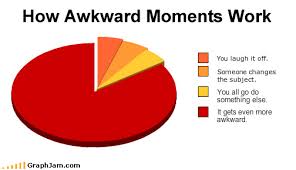
Wikipedia describes the elephant in the room phrase as “an obvious truth that is either being ignored or going un-addressed…an obvious problem or risk no one wants to discuss…” awkward moment image

Five Steps to Managing the “Elephant in the Room”

Recognizing the elephant in the room is an important first step.  The real finesse, however, comes in acknowledging  the elephant in a manner that allows everyone to feel comfortable enough to participate in the discussion and then to move past it.  Let’s take a look at some of the ways that we can tame the proverbial “elephant in the room:”

  1. Open up the discussion by expressing the issue and inviting input from others.  To do this effectively necessitates that you share your views with little or no emotion.  Why?  Because emotions are contagious and at this point, you are looking to ask others to share.
  2. Asking others to share their viewpoint displays consideration for their perspective.  Stop and listen —really listen—to what they say.  Acknowledge their input and demonstrate a sincere interest in their comments.  Creating an environment where someone feels like they can share allows you to discuss a potentially “forbidden” subject and sets the tone for continued dialogue.  As the dialogue continues, you collect more information that can be used for a reality check.
  3. Do a reality check:  Is this really an elephant or can we resolve this with less drama?  Your attitude on this may set the tone for others and alleviate stress or awkwardness.  Honesty expressed in a calm and thoughtful manner can help to disarm the elephant.
  4. Be honest, direct and convey confidence.  A difficult issue becomes an elephant in the room when it is ignored despite everyone being aware of it.  By naming what others may be avoiding, you will transform the elephant into an obstacle—obstacles are far less overwhelming for the psyche to handle and move off of.
  5. Move forward:  Thank everyone for their inputs.   Summarize the next steps.  Ask others to concur with your summary.  Where possible, ask others to take on a responsibility that increases the likelihood of maintaining harmony.

Deep breath.  You can tame the elephant and move forward.

original post : “You, too, Can Tame the Elephant in the Room” http://ow.ly/qJHb8 by@sharonlewisnyc [TODAY’S POST] #MENGonline #Marketing #Leadership


How Do I Trust Thee in the Workplace: Let Me Count Five Ways

How Do I Trust You?
For many, the answer could not be simpler: I trust you or I do not trust you. Who cares how you define it?

I propose that the answer is not quite so simple:
• Trust is a cornerstone of creating change
• Trust requires a relationship between two or more people; Not all relationships are created equal
• Trust implies that even when you, yourself, are uncertain of something….the other party (parties) will help you to uncover the issues and direct you to a solution
• Trust involves a leap of faith; it is easier to speak about trust than to “do trust”
Hence, just like we have various types of power, types of love and types of communication….we have numerous types of trust in the business setting. The person that you trust to run your medical office is not necessarily the same person that you trust to decorate your home, edit your son’s college application or help you with your retirement planning.

Here are FIVE KEY questions to understand trust in a professional working environment:

1. Do you have Professional Trust?
Professional trust in the business setting is often a function of dependability.
• Will you deliver what you promised/exceed the expectations of what you promised?
• Are you a team player?

2. Do you have Rules-Based Trust?
This refers to the trust that people have in the rules of society. For example: people politely form lines when walking up stairs; they avoid eye contact on crowded buses and they superficially begin most conversations with the expression:” How’ya doing?”

In previous work environments, rules based trust said that if we work very hard and demonstrate loyalty to one employer, our efforts will be recognized in status, salary and security. In today’s environment, those rules have changed. Hard work is a function of one’s personal drive to achieve and those achievements are portable into other situations, employment or entrepreneurship.

3. Do you have Situational Trust?
This reflects personal experience and is assumed to carry forward to the current situation. It applies to both workplace and non-workplace forms of trust.
• We trust our management team to provide guidance and support to us in meeting our objectives;
• We trust our educational systems to engage us in learning that will be valued in the marketplace;
• We expect that those we work with will be supportive of our personal efforts and responsible in the delivery of their own individual responsibilities.

4. Do you have Medical Trust?
I sit in the endodontic chair having root canal and trust that his expertise and his steady hand will get me through the procedure

5. Do you Trust Your Instincts?
This is another one of the trusts that have both workplace and non-workplace applications.
• You must have a level of trust in yourself so as to be able to trust another
• There was an Oprah magazine article that said something like “take advice as advice”. Everyone gives you their two cents, but you have to follow your gut.

Summary:
Trust is a special relationship that exists between two or more people. The power of trust is significant as it is the cornerstone of change, as well as the cornerstone of on-going working relationships. Not all trust is created equal. However, every form of trust deserves to be treated as the valuable asset that it represents.

How do I Trust Thee in the Workplace…Let Me Count Five Ways!

This blog originally appeared 01/2014 via #EQlist: What Every Entrepreneur Needs to Ask to be Successful goo.gl/d4XFwV

Is there a formula to asking Brilliant Questions?

Albert Einstein is quoted as saying, “If I had an hour to solve a problem and my life depended on the solution, I would spend the first fifty-five minutes determining the proper question to ask, for once I know the proper question, I could solve the problem in less than five minutes.”

Not surprisingly, Einstein makes a good point. And, so I set out to ask others what they think of that observation. In turn, practicing the philosophy first hand. The dialogue was great. The conversations produced a list of seven common themes. And so, with a number of qualitative research projects on my plate, I set out to be uber-deliberate in using these themes in the formulation of the questions that I would be taking into the field. Correlating the brilliant question criteria to my own facilitation guides did indeed have a positive impact!  Here are the seven themes:

What qualities make a question brilliant?

1. Inspiration to see things in a new light

For example: Five plus five equals ten; what other numbers can be used to get me to ten?

  1. Generates thoughtful willingness to challenge the norm

Referencing Storm Sandy remains a tangible reference point. What would happen if a critical piece of this process were no longer available?

  1. Creates ownership of the solution

Tell me: What do you suggest we do here?

  1. Provides clarity of purpose

In explaining what someone does, they are forced to account for how the dots connect.

  1. Encourages new solutions

Probe: What are the frustrations in doing it this way? Can that be done in any other way?”

  1. Asks for an evaluation of limited resources

If you had the power to change it, what are the consequences of choosing A over B?

  1. Open ended enough to solicit the “how, why and what do you think about this” yet tight enough to provide direction to the thought process

Imagine yourself painting a picture. Now imagine yourself painting a picture of the golf course where you played last week-:)

Image

Look Elsewhere for Answers

In addition to the quest for consistently developing brilliant questions to ask, it always astonishes me when the “ah-ha moments come from where you least expect.

I was recently contracted to interview people that could help us learn more about employee overtime as a source of income in today’s economic environment. While speaking to individuals across industries, it was time to dig deeper within a particular function within a particular industry. Employees, HR executives, department managers all provided lots of interesting insights. It was the conversation with a professional in a completely unrelated industry to the one that I was researching….that the “ah-ha” moment came into place. My facilitation guide took on a new twist and each time I presented the “ah-ha” question to my interviewees…they lit up in the same way that I did with the implications presented. This was empowering. And, it was fun for all involved.

When in doubt, provide praise

In the exploration phase of a project looking to uncover breakdowns between functional departments, I was presented with an opinion that I did not quite know what to do with. “Great point. No-one else has mentioned that”, I said.  “Tell me more.” And the flood-gates opened!

Do you find yourself asking questions that lead you to great answers?

“Learn from yesterday, live for today, hope for tomorrow. The important thing is not to stop questioning.” (said the same man).

5 Steps to Creating Your Life Reimagined Attitude

The subjects of – Life Reimagined, What’s Next? and What am I Going to do When I Grow Up –  continues to experience increased levels of attention across the nation. Ironically, it is a conundrum for boomers and millennial alike as we try to find satisfaction in our work and in our work: life balance!

TV anchors Jane Pauley and Tom Brokaw spoke at 92Y in New York City recently. The discussion focused on the boomer generation and those who at aged 50 and older are finding new directions in their pursuits: Directions that are fulfilling and accomplished. Having the opportunity to be in the audience, allowed me to reflect on my own discovery process and to define 5 key take-aways  to a Life Reimagined Attitude.

1.Just Say Yes

Do you get your ducks in order or put your ducks in the water? Just do something, as a previous Nike ad campaign promoted. Ambiguity and insecurity are facts of life. Just say “Yes”.

2. Small Changes can have a Huge Impact

Can I do something just a little bit different so as to allow me to continue leading my selfish life or Do I have to help those in third world countries? (Concept asked by Tom Brokaw)

  • When the individual known for throwing wonderful parties and being a fabulous cook starts a catering company – this would seem to be a variation on a previous career
  • A minister who moves from a large congregational setting to the ministry for the US armed forces in Iraq might be a conceptual example of combining current career and social purpose.

Back to advice point #1: Just say yes; do not allow analyses paralysis to prevail.

3. A hobby can be anything that you like to do

“What is a hobby?” says the workaholic. “What is a hobby” says the career-focused mom. What if I never developed any hobbies or secondary passions that I can move into my What’s Next Life Into? (Concept asked by Jane Pauley)

My personal response is “Ditto – I hear ya, sister”. As such, I am more often practicing the first rule of the list: “Just Say Yes”

4. One need not Save the World—One Just Need to Enjoy the Adventure to ……whatever

More than anything, this one is the attitude adjustment advice! A recent article in Fast Company called You are Only as Busy as You Think You Are spoke to how one can create their own bits of evidence to substantiate any feeling or belief. Hence find positive bits of evidence and you will find you can completely change the way you see the world.  We can often make ourselves much happier and less stressed if we give ourselves permission to just enjoy the adventure.

5. Break big goals into smaller, attainable short term goals. Consider Life Reimagined as “Your Life Emerging”.

Here’s to the discovery process!

Life Reimagined for Work helps experienced professionals find jobs, manage their careers, start businesses and explore options through engaging articles and interactive tools. The  LinkedIn group offers inspiration, support and insights from their dynamic community.”

Leveraging Today’s Workforce for a Competitive Advantage

Traditional employment models and traditional retirement models are changing daily as 10,000 Baby Boomers born between 1946 and 1964 celebrate a 65th birthday — previously coined “retirement age”.  The aging of the workforce presents employers with challenges related to compensation, retirement, work preferences, knowledge transfer, and so much more. This environment demands a methodical and holistic strategy for managing a multi-generational workforce.

This article will summarize the @Fedcap hosted #SolutionSeries  with a guest panel that included Dick Cattani of the Compass Group, Dr. Kathleen Christensen of the Working Longer Program of the Alfred P Sloan Foundation and Sandra Timmermann, Founder of the MetLife Mature Market Institute.  The discussion focused on today’s changing workplace demographics.

One of the first things to acknowledge within this transformational change is the wide variety of nomenclature that is used to address the individuals that sit smack in the center of this demographic shift.  During the 45 minute panel discussion, reference was made to:

  • The Baby Boomers
  • High Potential Late Career Individuals
  • Older Workers
  • Aging Americans
  • Those preparing to Age Gracefully
  • Seniors
  • Transitioning Employees
  • And, a few more phrases!

So what are some of the impacts that this aging workforce is creating in the marketplace:

Our longer life expectancies have created a 30 year retirement after a 40 year career. Uh-oh!

Perhaps the word retirement needs to be redefined to reflect a life stage that occurs much, much later in one’s lifetime. Employers need to start thinking about a longer working period during which individuals are looking for a balanced life that includes continued work, play, volunteerism and more.

The objective is for work: life balance, not workplace separation or a career conclusion.  In fact, just the other day my friend Judy, who recently made a retirement agreement with her corporate employer defined retirement as “the ability to work on my terms” – no change to her work ethics or to the  ferocious vigor that she pursues in her work – but, “on her terms”!

The time is ripe for new models of worker engagement.

A diverse workforce needs to include the aging American work patterns.

“Businesses are not thinking about an older workforce except for graceful exits” said Dr. Kathleen Christensen. “Business has spent a lot of time recently creating a diverse workforce” said Dick Cattani, and the definition of diversity did not include the aging workforce.

Hearsay conversations revealed mixed findings on those corporations that are putting formal programs in place to respond to the aging worker trend.

Employers are fast realizing that the aging worker population presents a complex employee profile.  

Our lifecycles include Adult 2.0

Timmermann referenced a new lifecycle stage called Adult 2.0. Others have referenced this period as our Encore years, our Second Act or Life Reimagined. For Timmerman, the 21st century creation of Adult 2.0 is similar to the recognition of the adolescent life stage during the 1930’s; it is a unique period of time filled with change, growth, exploration and experimentation.

With the creation of adult 2.0, we move through life in five stages: childhood, adolescence, adulthood, adulthood 2.0 and old age.

Employers will want to take another look at this new generation of 2.0 adults and remember that most are Boomers who influenced so many aspects of society as they moved through the last several decades. Whether these trailblazers continue to work or become agents of change in their communities, they will define what it means to live and to contribute in this new stage of life, now and for future generations.

Look around – for many — 2.0 includes many re-incarnations of their identity, incorporating new talents, hobbies and relaxed attitudes!

Millennial and Boomers have more in common than first appears! Think Work: Life Balance 

When talking to the win-win that flex-scheduling can provide, imagine the impact on a millennial, born after 1980, whose flex schedule allows them more time with their young children. Simultaneously imagine the Baby Boomer, born between 1946 and 1964, whose flexible schedule allows them more time to pursue their hobbies, their volunteer interests or their family caregiver commitments.

Scheduled in a complimentary fashion, the millennial employee, the boomer employer and the employer have all received flexibility which meets their needs. Everyone wins. Everyone feels better and everyone believes that they have achieved some sense of control in their work: life balance.

Flexible Work Schedules are Strategic Tools for Developing Human Capital 

The panelists acknowledged that numerous studies have shown the positive impact on productivity, employee engagement and employee satisfaction levels when flexible working schedules are employed.  To do this necessitates a culture of respect and trust and will evolve through a new style of win-win negotiation in the workplace. “Companies should not view flex-schedules as an employee accommodation or an employee perk, but rather as a strategic business tool that they use to strengthen their employee capital “, said Dr. Christensen.

Boomer Weaknesses and Millennial Strengths often Mirror Each Other 

Example #1:  Strategic thinking, the ability to lead through a crisis, and a brain-bank of Best Practices are traits most likely achieved only through the tenure and experience of someone aged 50 plus. Technological literacy and the use of social media channels may (or may not) be easier for the millennial.

Put together correctly, the productivity outputs of this duo can be multiplicative.

Panelists referenced the creation of mixed-age teams that have been empirically tested in Europe and the results showed that the inter-generational teams proved most productive and gratified for all participants.

Example #2: Boomers and millennials want to do good work and they want to be recognized for same. Careers take on many variations of a bell curve; for many Baby Boomers in traditional corporate backgrounds, they spent the decades of their 30-50 years climbing the corporate ladder and playing the political games. In the traditional workforce the millennial are now entering the heat of their ladder-climbing career stage.

Team efforts which allow for coaching, mentoring and knowledge transference can benefit both employer and employee alike.

Companies have a bias against the older worker  

In an AARP survey of registered NYC voters over the age of 50, one third said that they or someone they know has experienced age discrimination in the workplace. Myths, stereotypes and biases are common.

Companies have a bias against the older worker. Wikipedia defines a company as “an association or collection of individuals, people or “warm-bodies” …. Company members share a common purpose and unite in order to focus their various talents and organize their collectively available skills or resources to achieve specific, declared goals……”

We change companies by changing the individuals who make decisions for companies. 

  • What is your business doing to recruit, engage and retain talented employees at different career stages?
  • How does your business use a multi-generational approach to creating work teams across the organization?

Repeat: We change companies by changing the individuals who make decisions for companies.  

Healthy, well-educated, enthusiastic people of all ages want to have a seat at the table. It is one’s attitude, not one’s age that defines one’s abilities to make a difference!

==================================================

Tweets All My Own

=================================================

The FedCap Solution Series gathers employers’ nonprofits, advocates and other thought-leaders to analyze the barriers between Americans and economic independence – and to develop informed and actionable plans to break through those barriers. The Fedcap Solution Series is designed to trigger discussions and frame the questions that ultimately lead to the right solutions